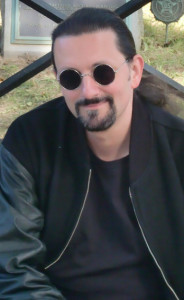
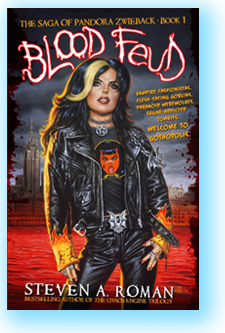
 It was close to a year ago that I contacted Steve Williams, the power behind Write a Revolution—a website dedicated, as you might expect, to promoting writers—about the possibility of WaR interviewing me to promote StarWarp Concepts and its titles. After reading Blood Feud: The Saga of Pandora Zwieback, Book 1 and the horror anthology comic Lorelei Presents: House Macabre, Steve enthusiastically agreed to set up an interview, which ran in August 2015.
Fast-forward to this past weekend, when I was doing one of my occasional checks on the Pan website to confirm that links we’ve set up still work—and much to my surprise, I discovered that Write a Revolution is gone! Don’t have a clue why that happened, but with the site, and my interview, now lost in the depths of the Internet, I thought you folks might want to read it, just in case you missed it the first time around.
So here for your reading pleasure, is Part 1 of that “disappeared” interview…
WaR: I believe your company, StarWarp Concepts, has been on the scene for a while now.
SR: Since 1993. But back then it started out as a comic book company that I set up so I could publish a series I’d created called Lorelei, about a woman who winds up getting caught in a supernatural situation and gets turned into a succubus. It was a pretty character-driven comic—no superhero fistfights or explosions or the like—and sold well enough in the nineties for a black-and-white series, but the market dried up when there was a major collapse of comic book distributors late in the decade, leaving only Diamond Comic Distributors. To this day, they’re really the only game in town for comic publishers, but Diamond’s focus is on the major companies—Marvel, DC, Image—with not a great deal of interest in the small presses.
When I rebooted the company in 2010, I moved away from comics and concentrated on publishing, for the most part, dark fantasy and horror books and graphic novels.
WaR: Lorelei Presents: House Macabre has a great grindhouse feel to it, almost reminiscent of some of Quentin Tarantino’s early work or the Rob Zombie movies. Do certain movies or film genres influence your work at all?
SR: Oh, sure. In the case of House Macabre, the influence comes from horror anthology movies like Trick ’r Treat, Trilogy of Terror, and Creepshow, but it also comes from comics like EC’s Tales From the Crypt, DC’s House of Mystery, and magazines like the original Creepy, Eerie, and Vampirella—short stories with a little twist at the end. Like most of the projects I come up with, it’s a nod to the kind of stuff I grew up reading.
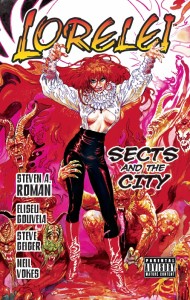
I’d say there’s more of a grindhouse feel to the Lorelei graphic novel that preceded House Macabre: Lorelei: Sects and the City, in which she battles a cult of Elder God worshippers. Unlike House Macabre, Sects is aimed at an adult audience, with sex and nudity and a whole lot of F-bombs. It’s basically a love letter to 1970s horror comics and movies; a few reviewers commented that it’s the sort of story that might have interested Hammer Studios, back in their heyday, which I consider a great compliment.
WaR: Who are the talented artists behind the drawings and where does the inspiration for characters come from?
SR: In Lorelei Presents: House Macabre, we’ve got cover artist Louis Small Jr., who made a name for himself in the 1990s as a supreme “bad girl” artist, drawing characters like Vampirella, Lady Death, and a bunch of others. The four-page introduction (written by me) that starts the comic, in which Lorelei greets the readers, was penciled by Uriel Caton—who once drew a Justice Society of America annual for DC Comics, and now is a top designer for Diamond Select Toys—and inked by “Chainsaw” Chuck Majewski. “All in Color for a Crime” (also written by me) was drawn by Lou Manna, who worked on DC’s superhero comics Young All-Stars and T.H.U.N.D.E.R. Agents. “The Basilisk” (again, written by me) was drawn by John Pierard, who’s mainly a book illustrator. And “Requiem for Bravo 6” was written by Dwight Jon Zimmerman—a New York Times bestselling author, and a former writer of Marvel titles like Iron Man and Web of Spider-Man—and drawn by Juan Carlos Abraldes Rendo.
Lorelei: Sects and the City [a Mature Readers graphic novel] was written by me and has a cover by Esteban Maroto, who’s a comic-art legend with credits like the original Vampirella and Creepy, and a ton of DC Comics titles. The interior art is by Eliseu Gouveia, who’s drawn comics like The Phantom and Vengeance of the Mummy; Steve Geiger, a former Marvel art director who drew Web of Spider-Man and The Incredible Hulk; and Neil Vokes, who drew comic series like Fright Night and his own current one, Flesh and Blood. The book has a vibe that’s sort of a combination of classic movies like The Devil Rides Out and 1980s Lovecraftian horror flicks like Re-Animator.
Lorelei herself was inspired by Vampirella, Marvel’s Satana, the Devil’s Daughter—who’s a succubus—and 1980s exploitation movies like Abel Ferrara’s Ms. 45, and even the TV show The Equalizer, because New York in the ’80s was a pretty dangerous place to live. When I created her in the late ’80s, I set out to create a sexy action heroine in that sort of grungy, urban setting, but didn’t want to make her a vampire, since that always seems to be the lazy, default setting for any female horror character. Back then, there weren’t too many comic-book succubi who went around seducing men and stealing their souls—I don’t think there are all that many, even today—so that’s what Lorelei became.
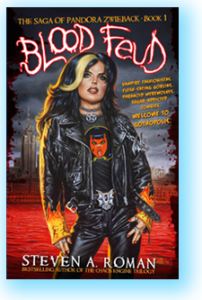 WaR: In the young adult novels Blood Feud and Blood Reign, you introduce Pandora Zwieback. Who is Pandora and what’s her story?
SR: Pan is a sixteen-year-old Goth who spent the last decade being diagnosed as a paranoid schizophrenic because she can see monsters. But after she meets an immortal monster hunter named Sebastienne “Annie” Mazarin, she learns that she doesn’t suffer from a mental illness—she has the power to see through the human disguises worn by the monsters that actually exist in the world. How she wound up with that power is a complete mystery to her and her parents, but before they ever get a chance to start figuring it out, they get swept up in a war involving vampire clans looking for what they think is an ultimate weapon. And it just so happens that it was delivered to the horror-themed museum owned by Pan’s dad.
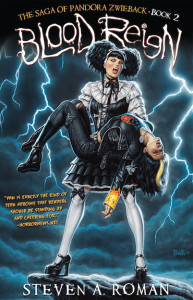
Blood Feud: The Saga of Pandora Zwieback, Book 1 introduces Pan and her cast of characters, and sets up the vampire war. Blood Reign continues the story, adding more details on Pan and the relationship Annie had with the fallen angel who’s leading the vampires against humanity. They’re both extremely character-driven novels, because I love writing for Pan and getting her take on this whole potential end-of-the-world scenario she’s found herself in.
 WaR: How do you get into the minds of your characters and make them tick? What I mean is, when you’re writing about women for example or characters that experience things that you have no personal knowledge of, how do you keep it realistic?
SR: That’s a good question—I’m still trying to figure out how I’ve managed to get inside Pan’s head! I mean, obviously, I’ve got no experience in being a sixteen-year-old girl, but I do remember being something of a socially awkward nerd in high school, so I have that to draw on, to some degree. I’ve taken the old axiom about writers writing what they know and applied that to her, so she’s a horror fan and Mets baseball fan and comic book lover, and then I add more facets to her character as I go along. So far, it’s been working—my favorite convention story involves me telling a woman about Blood Feud and explaining Pan’s character in some detail, and her response was, “That sounds fascinating. Is the woman who wrote the book here?” When I pointed out that I was the author, she said, “That’s incredible! But how could you know what it’s like to be a sixteen-year-old girl?”
I think a lot of getting into the mental processes of the characters comes by playing certain kinds of music to set a mood. If I want to write a sad scene—say, like the discussion between Pan and her mom in Blood Feud, about the effect her parents’ divorce has had on her—I’ll play something that’ll intentionally make me feel melancholy, and put it on a loop. If I get a little misty-eyed when I read the scene over, then I know I’ve gotten inside Pan’s head and nailed down her emotions. For action scenes, I usually play movie sound tracks, like Hans Zimmer’s scores for the Batman trilogy and Man of Steel, or David Arnold’s for the John Singleton movie Four Brothers.
Coming tomorrow: A behind-the-scenes look at StarWarp Concepts—the thinking behind certain projects, promotions, and book-marketing strategies.
 A few weeks ago, I got this message from e-book distributor DriveThru Fiction, which sells digital editions of the Pandora Zwieback novels, as well as other StarWarp Concepts titles:
 WaR: Have you tried giving anything away for free or include special offers to try and entice readers? E.g. free chapters, promotional items, limited day price reductions.
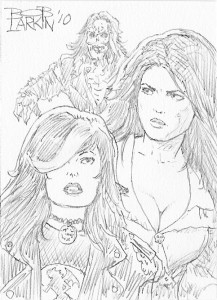 For the 2011 New York Comic Con, I used the show’s database to contact people who’d listed the StarWarp booth as one of their planned visiting points, and e-mailed them certificates for exclusive Pandora Zwieback sketch cards that the novels’ cover painter, Bob Larkin (who used to work for publishers like Marvel and Bantam), had done for me. Only one guy showed up to claim a card—and even he didn’t really want it. He’d come to the booth to find out what was going on with Lorelei! (laughs)
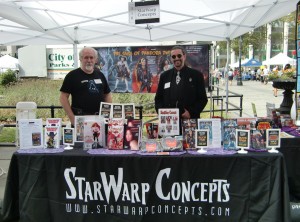 SR: I attend some conventions and book festivals during the year, which tends to work better for sales than the online promotions, because I’m able to tell attendees about the books, on a one-on-one basis. The big show for me is the Brooklyn Book Festival, which is held in September, because I’ve started building a fanbase there that will seek out the StarWarp Concepts booth so they can check out the latest releases.
 WaR: What level or research and planning goes into each project you undertake at StarWarp?
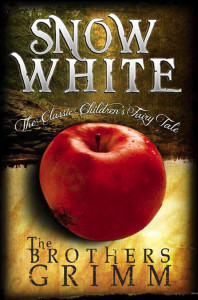 The Illustrated Classics line we have—which right now consists of the vampire novella Carmilla, Edgar Rice Burroughs’ A Princess of Mars, and the Brothers Grimm’s Snow White—are chosen for various reasons: they’re well-written books I enjoy; there’s some movie or event I can tie them to; or I know they’ll appeal to dark fantasy fans. Carmilla involves vampires, so that was a no-brainer—vampires will never go out of style. A Princess of Mars was published to take advantage of Disney’s John Carter movie, since the movie’s based on that novel. Snow White came about because I found a children’s storybook published in the late 1800s, with pristine, full-color illustrations; since the book was in the public domain, we scanned the art and released it as an e-book. And the original spot illustrations for Carmilla and Princess—all done by Eliseu Gouveia—are a major selling point for those books, especially at conventions.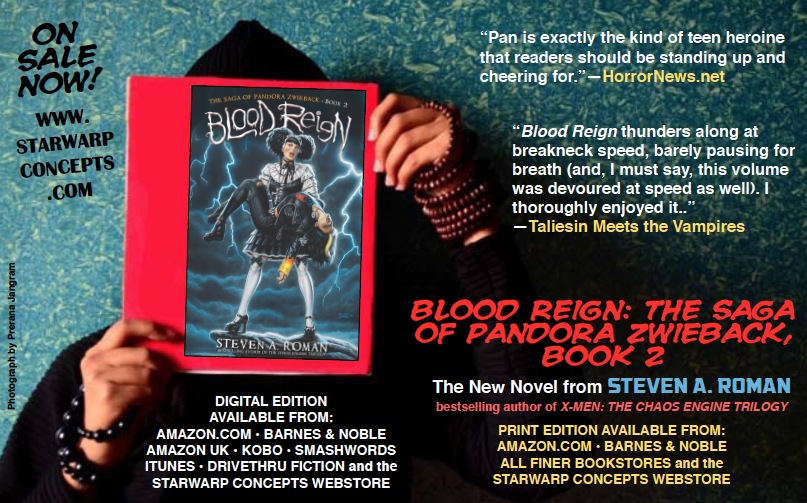
 Heads up, residents of the United Kingdom and the European Continent: Barnes & Noble just sent us some bad news for you e-book fans who purchase titles from their Nook Store—news that affects publishing house StarWarp Concepts, as well!
 An interesting topic came up last week, while I was talking with Richard C. White, author of StarWarp Concepts’ supernatural graphic novel Troubleshooters, Incorporated: Night Stalkings, pirate-fantasy digital comic The Chronicles of the Sea Dragon Special, and the popular how-to book for writers, Terra Incognito: A Guide to Building the Worlds of Your Imagination. Rich had been a guest at a recent MystiCon fantasy convention and had a conversation with some school librarians who were interested in adding his writers reference book, Terra Incognito: A Guide to Building the Worlds of Your Imagination, to their lists of e-book titles. But how, they asked, would they be able to obtain it? As librarians, they’re required to order books from distributors, not from publishers; that applies to e-books as well.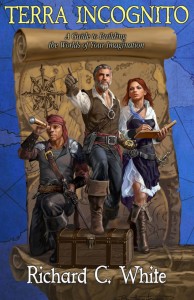
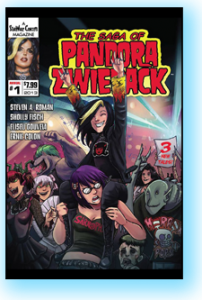 Along with Blood Feud and Blood Reign, on sale right now is